
Sustainable Development Goal
Government Engineering College Bharuch, as a state level technical institute, recognizes its pivotal role in advancing sustainable development through education, research, governance, and social impact. In alignment with the United Nations’ 2030 Agenda for Sustainable Development, India’s National Education Policy (NEP) 2020, and NITI Aayog’s SDG India Index, this policy/guideline aims to integrate the Sustainable Development Goals (SDGs) into the college academic and administrative framework.
This policy document outlines the comprehensive framework for Government Engineering College, Bharuch (GEC, Bharuch) to actively contribute towards achieving the United Nations’ Sustainable Development Goals (SDGs). Recognizing the importance of sustainability in all aspects of higher education, this policy aims to guide the college’s actions, strategies, and partnerships to foster sustainable development on campus and beyond. By integrating sustainability into research, education, operations, community engagement, and governance, GEC, Bharuch shall strive to become a leader in sustainability and make a significant positive impact on society and the environment.
Further, the College is committed to becoming a sustainable institution that actively contributes to the achievement of the SDGs. By integrating sustainability into its core operations, Government Engineering College, Bharuch aims to inspire future generations, advance research and knowledge, and create a positive impact on society and the environment. This policy serves as a guiding framework for the College’s sustainable development efforts and shall be regularly reviewed and updated to ensure its effectiveness and relevance in a rapidly changing world.
Policy/Guidelines on Achieving Sustainable Development Goals (SDGs): Click Here
Contribution to achieve SDGs
Borewell recharge system at GEC, Bharuch:
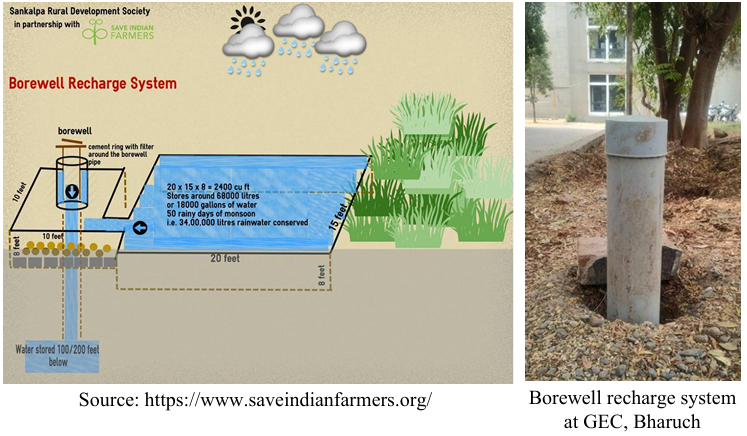
To support SDG 6: Improving Water Use Efficiency and Sanitation, a borewell system integrated with rainwater collection has been developed in GEC, Bharuch. Rainwater from rooftops and open surfaces is collected, filtered, and directed into the borewell for groundwater recharge. This system reduces surface runoff and enhances groundwater levels sustainably.
Solar Power Renewable Energy at GEC, Bharuch:
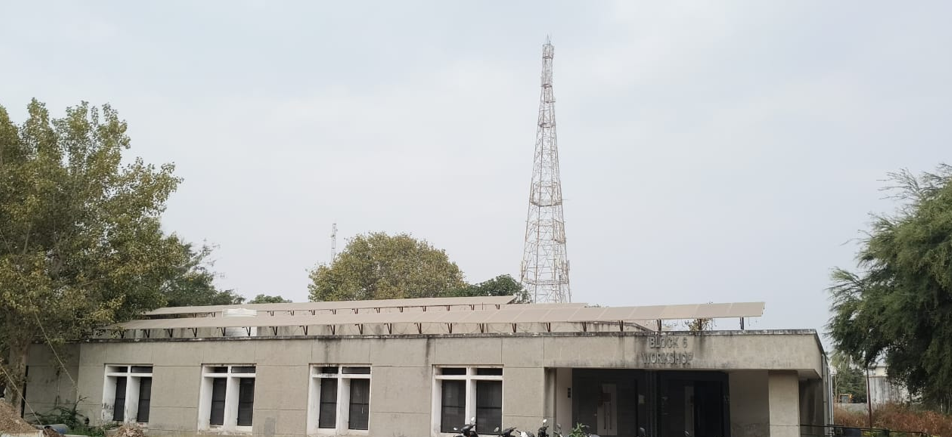
To achieve SDG 7: Ensuring Energy Security and Efficiency, a solar power renewable energy generation system has been implemented. The system harnesses clean and abundant solar energy to produce electricity, reducing dependence on fossil fuels. It improves energy efficiency by providing reliable, low-cost power with minimal losses. This application supports sustainable, affordable, and environmentally friendly energy access.
Project on Robot capable of navigating complex terrains and obstacles:
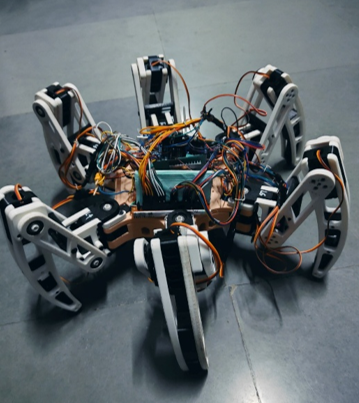
The robot capable of navigating complex terrains supports SDG 13: Combat Climate Change and its Impacts • Audit of campus and green rating for their built-up infrastructure by enabling efficient environmental monitoring and campus infrastructure audits. It assists in assessing green ratings of built-up areas by collecting data from difficult-to-access locations. The project promotes climate-resilient planning, reduced manual intervention, and data-driven strategies to minimize the campus carbon footprint and enhance sustainability.
Moreover, the project ideation on designing “Hexapod Robot” submitted by Prof. Devendra R. Patel, Asst. Prof., EC Engg. Dept., along with Mr. Piyush Thakur, Sneha Pathk, Harshit Singh, Awais Kadri and Astuti Kumari, students of GEC, Bharuch have been successfully selected from Level I (Ideation) to Level II (Proof of Concept) in Inda’s biggest Robotics Competition, ROBOFEST-GUJARAT 4.0. As a token of recognition, the team has been awarded for a cash price of Rs. 50,000/-.
Source to NITI Aayog’s SDG India Index: https://share.google/xe3tKLLRHwApMFRDa